LYRIC O’ THE DAY:
They were once known as angels from the sky and heaven
but now they are known as devils, demons, alien monsters
--Away with the Fairies, Inkubus Sukkubus
I love Fairies. Whether they go by pixies, sprites, elves, dwarves, wee folk, fair ones, banshees, hobgoblins, the Fae, or the Sidhe, I'm a fan. And while I can appreciate images of Disneyfied winged cuties, my favorite Fairies are the ones that Terry Pratchett, Laurell K. Hamilton and Karen Marie Moning write about: fantastic creatures with parts of darkness and light.
 |
| Dancing Fairies, by William Blake |
Fairy stories exist in the folklore of nearly every culture. These ethereal creatures have come to represent everything from garden helpers to ghosts of the dead. Milk souring may be a chemical reaction to some, but to others it’s the work of naughty Fairies.
 |
| I only look innocent. |
There are many explanations for the origin of Fairies. Nordic folklore claims when the angels revolted, God closed the gates of Heaven. Angels caught between Heaven and Hell became Fairies--not quite angels and not quite devils. This may explain stories of Fairies paying a tithe to Hell to escape Satan's grasp. In the middle ages, Fairies were equated with demons or the souls of the dead. It was considered a work of witchcraft to deal with Fairies.
 |
| Most early Fairy stories are frightening tales with malicious spirits. |
Fairies have also represented pagan deities and their descendants. Some of the most intricate Fairy history lies in Celtic myth, which claims the Fae originated from dispossessed early tribes of the British Isles. These ancient races were the progeny of the goddess Danu (i.e. the mother earth goddess) and were sent from the heavens. They often are called Tuatha De Danann, and to some groups are considered the first extra-terrestrials to inhabit the earth. Unfortunately, the people of Danu were defeated by the Gaels and went underground for safety, taking the name of Sidhe. After centuries, they created their own world of Faerie rarely seen by humans. Some say they are still bitter about their defeat and will use their nature deity powers to ruin unprotected crops and livestock.

In the 15th century, the alchemist Paracelus divided fairies into 4 elemental groups: sylphs (air), gnomes (earth), undines (water), and salamanders (fire). He described them as a longer living humanoid creature. Fairies have also been classified as solitary types or trooping types. The trooping Fairies are the partying creatures, while the solitary Fairies associate themselves with certain locations (like trees or waterways) or even households.
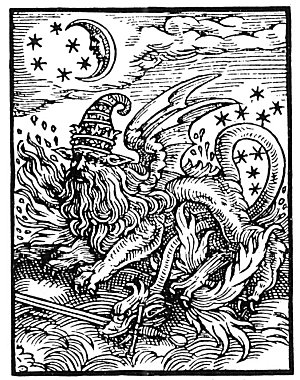 |
| A salamander according to Paracelsus. He was also considered the father of toxicology, and strongly believed in the mind/body connection of illness. |
Some Fairy lore separates the Fae into good and wicked types. The Seelie Court, or Blessed Court, is generally considered to be those who are benevolent--for the most part. The Unseelie Court, or Dark Court, are fairies who often victimize humans and Seelies alike. However, distinguishing the Seelie as good and the Unseelie as evil is far too rigid of a distinction--both will wreak havoc on humans and not think twice of the consequences. Sort of like the producers of reality TV. Fae lore is consistent that Fairies are generally more amoral than immoral and do not hold tight to the constraints of human right and wrong. The may find humans entertaining, forcing them to dance in fairy circles until they collapse or using them for more carnal pleasures, but for the most part, Fairies consider us lower life forms.
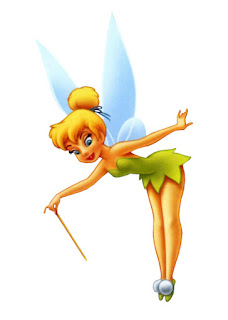 |
| You are totally beneath me. |
In most of ancient myth, Fairies were far more frightening and malicious. They also were typically sans wings--wings were likely a creation of the Industrial Revolution, when Fairies became relegated to children's stories. With the advent of modern theosophy in the 1900s, Fairies experienced a resurgence in popularity. Theosophy, a belief that humanity is undergoing a cycle of evolution towards increasing perfection, was a popular esoteric religious movement. In its belief system, Fairies were believed to represent Devas, or natural spirits. Charles W. Leadbeater, a mentor of the movement, went so far as to describe a seven leveled astral plan on which these Fairy spirits lived. He believed humans and fairies could be joined again once humanity attained a higher intellectual plane.
 |
| John Anster Fitzgerald's wonderful Fairy art. |
In 1917, Elsie Wright and Frances Griffiths, cousins from Cottingley England, published five photos of fairy encounters. The Cottingly Fairies gained popularity when Sir Arthur Conan Doyle, a spiritualist with ties to Theosophy, used them to illustrate an article he wrote. He believed the photos represented tangible evidence of psychic phenomenon.
 |
| One of the five photos of the Cottingley Fairies |
In the 80s, the cousins admitted their photos were staged with paper cutouts.
 |
| This fifth photo was the only one the cousins would not admit was faked. |
In April of 2007, a reported fairy corpse was sold on Ebay. The Derbyshire fairy was found by Dan Baines, a UK magician. He later admitted it was created as an April Fools' Day prank, but many held to the belief that the fairy was indeed real.
 |
| The Derbyshire Fairy |
Fairies are generally considered mischievous characters. Changelings are fairy children substituted for human babies, done as a prank or as vengeance for a human offense to the Fae world. The belief in changelings is similar to the idea of demonic possession. In Ireland, Bridget Cleary was killed in 1895 by her husband and ten others because they believed she was a fairy changeling. Reports on the case claim she was doused with urine, which deters Fairies. And really anyone else. Then she was burned to death in a Fairy exorcism gone awry. Michael Cleary was convicted of manslaughter, and four of the witnesses accused of “wounding.” There is still an Irish nursery rhyme that goes “Are you a witch/or are you a fairy/or are you the wife of Michael Cleary?”
 |
| Better days for the Clearys. |
If you want to keep the fair folk away, cold iron is your best bet. A knife kept in a butchered animal prevents the Fae from claiming it. A nail in your pocket keeps them away as well. The herb St. John’s wort or Ash berries will also work--if you put the berries in a child’s cradle, that can prevent the Fae from taking off with the babe. Church bells were thought to be a fairy deterrent in the middle ages, and may also factor into why horses and oxen were fitted with jingling bells on their harnesses. Shakespeare tried to make his Fae more PC by having Oberon, King of the Fairies in A Midsummer Night’s Dream, claim church bells did nothing to him--suggesting he was not a demon as popular culture suggested.
 |
| Titania and Oberon--in the magic of an antique jigsaw puzzle. |
Fairies have a few rumored weaknesses which a human could try to exploit. One is the use of a true name--mirrored in the tale of Rumpelstiltskin. By knowing a Fairy’s true name, it gives a person power over the Fairy. Some claim that Fairies also cannot lie and like vampires, must be invited in order to enter a dwelling.

If you would like to attract the Fae, one way to do it is to live somewhere close to a Rowan tree. Rowan trees are sacred to the fair folk and will provide a home and family fairy blessings and protection. Fairies are also fond of roses, as rose petals are vital in many of their spells. Fairies detest a glutton--always leave a swallow of milk in your glass or a crust of bread on your plate as an offering or risk Fairy follies. Even better is to leave them something sweet like honey.
Any sort of creative behavior, especially painting and making music, will draw the fair folk. It is said that the best fiddlers in Ireland were all trained by the Fae. Strong emotion will also bring them forth; although Fairies do not feel empathy, seeing humans overwhelmed by their feelings is very attractive to them.
 |
| A Rowan tree. There are even spells that can bring Fairies to your gardens. At dusk, set out a sweet cake or honey. Then say the following spell loud enough so the Fairies, but hopefully not the neighbors, can hear you. Little fairy with tiny feet. Play in the garden but leave it neat. Little fairy with hands so sweet I leave this offering for you to eat. Little fairy if this garden appeals I’ll leave you more of these tiny meals. |
 |
| Nene Thomas does some of my favorite Fairy art |
Fairies may exist to most people only through fiction. But anyone who has had the sudden burst of thought we call "the muse" or a vision so real that it makes the hair on your arms stand on end knows that there is always more than meets the eye. And one man's Fairy may be another man's angel. Or demon.

For now, I'm leaving some honey and wine out every few nights for the Fairies. And maybe some Ash berries in my kids' beds.


